How to Avoid Paying High Counter Fees at the Post Office
TL;DR
“Counter fees” at the post office aren’t a separate line item. They’re the higher retail prices USPS charges when you buy postage in person instead of online. By purchasing labels through Click-N-Ship or approved shipping software, you can access Commercial Pricing that saves roughly 30% on services like Ground Advantage. You don’t even need a printer, because USPS Label Broker lets you print your prepaid label at the post office for free, and you can skip the trip entirely by scheduling a free Package Pickup.
What “Counter Fees” Really Means (and Why They’re Higher)
There’s no surcharge called a “counter fee” on your receipt. The term describes something more subtle: the gap between what USPS charges at the retail counter (or the self-service kiosk) and the lower Commercial Rates available when you buy postage online.
USPS maintains two pricing tiers for most shipping services. Retail pricing is what you pay when a clerk prints your label or you use the lobby kiosk. Commercial Pricing is the discounted rate USPS offers through its Click-N-Ship platform and approved postage software. According to USPS’s own pricing page, USPS Ground Advantage starts “From $7.30 at the Post Office” compared to “From $5.09” at Commercial Pricing. That’s about a 30% difference on the entry tier.
Here’s a common misconception: many people assume the self-service kiosk in the post office lobby offers a discount over the staffed counter. It doesn’t. The kiosk charges the same retail rates. USPS markets lower pricing exclusively through online channels, stating “Save with Online Shipping” on its rate comparison pages. Practitioners on Reddit confirm this firsthand, with multiple threads noting that “Click-N-Ship is cheaper than the kiosk” and that third-party tools can sometimes beat Click-N-Ship itself.
So when people search for how to avoid paying high counter fees at the post office, what they really need is a way to access Commercial Pricing. The good news: it’s straightforward, and you have several options.
The 3 Fastest Ways to Skip Retail Pricing and Keep USPS Discounts
Buy Labels Online Through Click-N-Ship or Shipping Software
The single most effective way to avoid counter fees at the post office is to purchase your shipping label before you go. USPS formalized Commercial Pricing access through Click-N-Ship in 2023, making discounted rates available to everyday shippers (not just businesses) for Ground Advantage, Priority Mail, and Priority Mail Express.
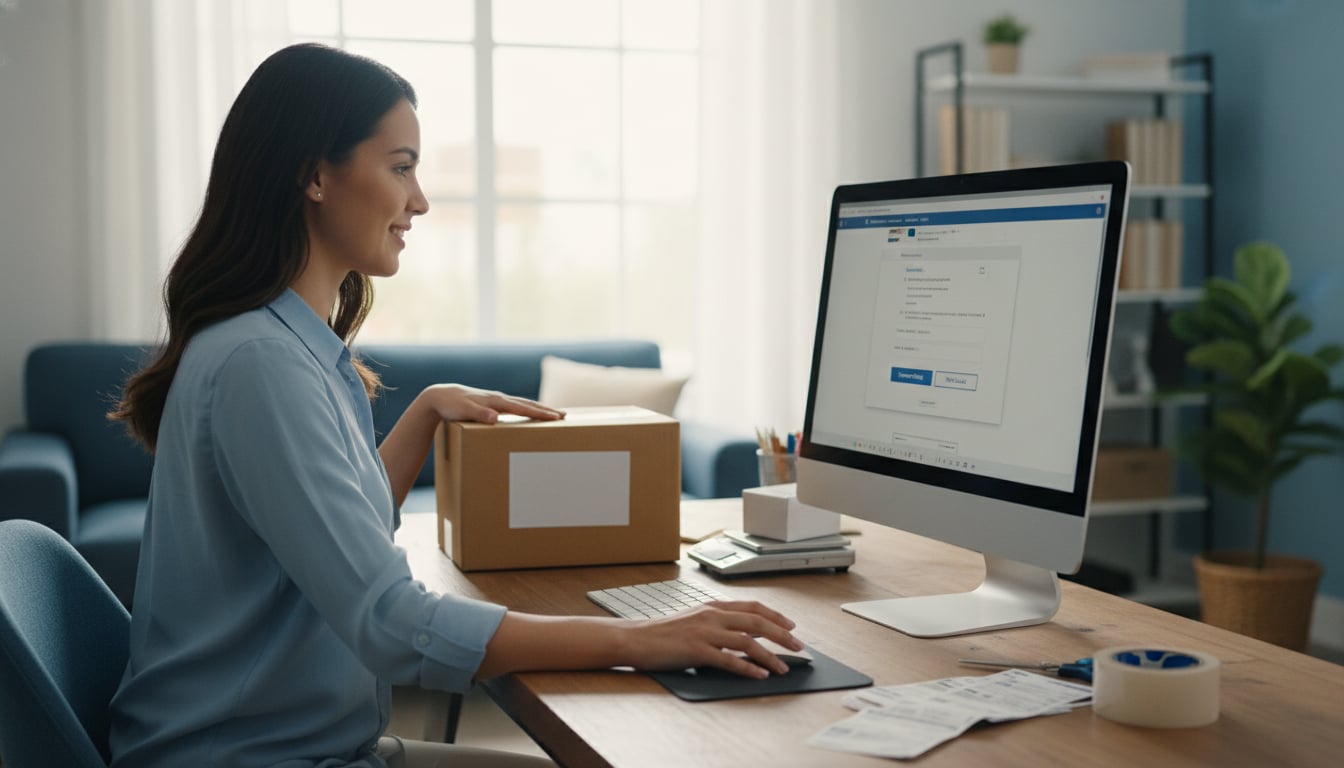
To use Click-N-Ship, create a free USPS.com account, enter your package details, and pay online. You’ll get Commercial Rates automatically.
Beyond Click-N-Ship, third-party shipping software (like Pirate Ship, Shippo, ShipStation, and others) also provides Commercial Pricing and sometimes unlocks additional options like cubic rates. These tools often let you compare rates across multiple carriers before committing, which is useful when you’re not sure whether USPS is actually the cheapest option for your specific package.
One eBay seller advice thread on Reddit notes that cubic pricing through third-party tools “can be a big unlock” for small, heavy items, though the poster warns to measure carefully because tiny size changes can bump you into a higher pricing tier.
If you ship regularly, explore shipping discount programs and label-buying partners to make sure you’re getting the best available rate every time.
No Printer? Use USPS Label Broker (Free Printing at the Post Office)
A common objection: “I bought the label online, but I don’t own a printer.” USPS has a solution called Label Broker. Here’s how it works:
- Purchase your label through Click-N-Ship as normal.
- Select the “Label Broker” option (sometimes labeled “Print at Post Office”).
- You’ll receive a QR code via email.
- Bring that QR code to a participating post office or self-service kiosk.
- They print the label for free and you’re on your way.
This is the key detail many people miss: you still get the lower Commercial Rate even though the post office is printing the label. You paid online, so the discount applies. You’re just using their printer.
That said, practitioners on Reddit report that while Label Broker works smoothly at most locations, “not every office is familiar” with the process. A few users have encountered staff who didn’t know about the feature or kiosks that weren’t enabled. The practical advice: have your QR code ready on your phone, and if one location can’t help, another nearby likely can. For more on how USPS prepaid labels work, including Label Broker specifics, that guide walks through the full process.
USPS also offers a “Label Delivery” service where they mail you the printed label for a small per-label fee. It’s slower, but still cheaper overall than paying full retail at the counter.
Schedule Free Package Pickup for Prepaid Parcels
Want to avoid the post office entirely? USPS offers free Package Pickup for prepaid parcels shipped via Ground Advantage, Priority Mail, or Priority Mail Express. Schedule the pickup online, leave your packages by your mailbox or front door, and your mail carrier collects them during their regular route.
This eliminates the counter, the line, the kiosk, and the trip. Combined with buying labels online, it’s the most complete way to dodge high counter fees at the post office. Our step-by-step guide to scheduling USPS pickup covers eligibility, timing, and what to do if your carrier misses the pickup.
If you ship multiple packages at once, generate a SCAN form through Click-N-Ship. One barcode covers all your parcels, giving you a clean acceptance scan for every package in the batch. This works whether you drop off at the counter or hand packages to your carrier during pickup.
Packaging Rules That Quietly Add USPS Fees
Buying labels online solves the retail-vs-commercial pricing gap. But there’s another category of avoidable charges that catches people off guard: packaging-related surcharges. These can add dollars to your postage even when you’ve bought the label at Commercial Rates.
The 22-Inch, 30-Inch, and 2-Cubic-Foot Nonstandard Thresholds
USPS applies nonstandard surcharges based on package dimensions. The thresholds that matter most:
- Over 22 inches on the longest side triggers a surcharge.
- Over 30 inches triggers a larger surcharge.
- Over 2 cubic feet in total volume adds a significant additional fee.
These fees are listed in USPS Notice 123, which updates periodically (typically in January and July). The exact dollar amounts change, but the thresholds themselves have been stable. The takeaway: measure your sealed package before you buy the label, and keep the longest dimension under 22 inches whenever possible.
If you’re trying to understand how weight, zones, and dimensions interact to determine your final cost, our guide to calculating shipping costs breaks down each variable with examples.
Dimensional Weight: Over 1 Cubic Foot Can Cost More Than You Expect
For commercial parcels exceeding 1 cubic foot, USPS may charge based on dimensional (DIM) weight rather than actual weight, whichever is higher. This catches people who ship large but light items in oversized boxes.
The formula is simple: multiply length x width x height (in inches), then divide by the DIM factor. If the DIM weight exceeds the actual weight, you pay for the DIM weight.
The fix is equally simple: use the smallest box that safely fits your item. Don’t throw a small product into a large box with extra packing material if a smaller box would work. This is one of the most common reasons people get an unexpected price adjustment after their “cheap online label” enters the USPS system.
Don’t Use Priority Mail Boxes for Ground Advantage
USPS provides free Priority Mail and Priority Mail Express boxes and envelopes. They’re convenient and well-made. But there’s a rule people break constantly: USPS-branded Priority Mail packaging must be used only for Priority Mail postage.
If you put a Ground Advantage label on a Priority Mail box (even if you turn it inside out), USPS can reclassify the shipment and charge you the Priority Mail rate. That “free box” just cost you the price difference between Ground Advantage and Priority Mail.
For Ground Advantage shipments, use plain boxes, poly mailers, or the specific USPS Ground Advantage supplies where available. If you’re weighing whether flat rate boxes make sense for your shipment, this comparison of flat rate vs. regular shipping can help you decide. And for a quick reference on available flat rate options, check the USPS flat rate box sizes and prices guide.
Mini Case Studies: How Much You Actually Save
Case Study 1: Small, Light Parcel via Ground Advantage
You’re shipping a 1-pound item in a box that measures 10 x 8 x 4 inches (well under the 22-inch threshold). Current USPS published prices show Ground Advantage starting from $7.30 at the post office versus $5.09 at Commercial Pricing online. That’s a saving of $2.21 per package, or roughly 30%.
If you ship 10 packages a month, that’s $22 saved just by buying labels online. Over a year: more than $260, with zero change in delivery speed or service quality. The only difference is where you purchased the label.
Case Study 2: Small, Dense Parcel and Cubic Pricing
You’re shipping a 3-pound candle in a 6 x 6 x 6 inch box. Because the item is small but heavy relative to its size, cubic pricing (available through some third-party shipping software and now partially through Click-N-Ship) can produce a lower rate than weight-based pricing.
Cubic pricing is based on the package’s volume rather than its weight, and it’s divided into tiers. The catch, as experienced sellers on Reddit point out, is that being near a tier threshold matters. A package measuring 0.49 cubic feet might fall into one tier, while one at 0.51 cubic feet jumps to the next. Measure your sealed dimensions precisely, not the box’s nominal size.
For small, dense items, always run a rate comparison. The cubic rate through online software frequently beats both the retail counter price and the standard Commercial weight-based price. You can compare rates across carriers to see exactly where the savings land for your specific dimensions and destination.
When Another Carrier Beats USPS
USPS Commercial Pricing is competitive for small and medium packages. But once your parcel gets larger (approaching or exceeding 1 cubic foot) or longer (past 22 inches), USPS nonstandard surcharges and DIM weight charges can erase the savings. At that point, UPS Ground or FedEx Ground sometimes comes out cheaper, especially for heavier shipments to nearby zones.
The habit to build: before you buy any label, run a quick multi-carrier comparison. Enter your dimensions, weight, and ZIP codes, and check USPS alongside UPS and FedEx. This takes about 60 seconds and can save you significant money on larger packages.
For a deeper look at where the carrier pricing crossover points tend to fall, our guide on which is cheaper, UPS or USPS walks through real scenarios. And if you’re open to less traditional options, the alternatives to USPS shipping guide covers regional carriers and platforms that sometimes undercut the big three.
One-Minute Checklist: Avoid Counter Fees Every Time
Use this quick routine before every shipment:
- Weigh and measure your sealed package. Record actual weight and all three dimensions. Keep the longest side under 22 inches if possible.
- Buy your label online. Use Click-N-Ship for Commercial Rates, or use shipping software that provides Commercial or cubic pricing. Never pay retail at the counter or kiosk.
- Compare carriers for larger packages. If the longest side is over 22 inches or total volume exceeds 1 cubic foot, check UPS and FedEx rates too. Use a multi-carrier rate comparison tool to spot the cheapest option.
- Use the right box. No USPS Priority Mail packaging unless you’re paying for Priority Mail. Use plain boxes or service-specific supplies for everything else.
- Print or Label Broker. Print the label at home, or select Label Broker and bring your QR code to a participating post office for free printing.
- Skip the trip. Schedule free USPS Package Pickup, drop your prepaid parcel in a lobby bin, or use a Smart Locker. If dropping off multiple packages, print a SCAN form for one-barcode acceptance.
That’s it. Six steps, one minute of planning, and you’ve avoided every avoidable fee at the post office.
Frequently Asked Questions
Is the self-service kiosk at the post office cheaper than the counter?
No. The self-service kiosk charges the same retail rates as the staffed counter. The only way to get lower Commercial Pricing is to buy your label online through Click-N-Ship or approved shipping software. USPS explicitly markets lower rates as an online-only benefit.
Can I avoid counter fees at the post office if I don’t own a printer?
Yes. USPS Label Broker lets you purchase a label online at the Commercial Rate, receive a QR code, and have it printed for free at a participating post office or kiosk. You still pay the discounted price. USPS also offers a Label Delivery service that mails you the printed label for a small fee.
Why did my online label get a price adjustment after I shipped?
The most common reason is a mismatch between the dimensions or weight you entered and what USPS measured. Dimensional weight applies for commercial parcels exceeding 1 cubic foot, and nonstandard surcharges kick in at 22 inches, 30 inches, and 2 cubic feet. Always measure your sealed package (not the empty box) and enter exact numbers.
Can I turn a Priority Mail box inside out and use it for Ground Advantage?
No. USPS requires that Priority Mail branded packaging be used only with Priority Mail postage. If you use a Priority box (even flipped inside out) with a Ground Advantage label, USPS can reclassify the shipment and charge you the higher Priority rate. Use plain boxes for non-Priority services.
How much cheaper is online shipping compared to the post office counter?
It varies by service, weight, and zone, but the gap is significant. For USPS Ground Advantage, current published prices show a starting rate of about $5.09 online (Commercial) versus $7.30 at the counter (retail), roughly a 30% difference. Priority Mail and Priority Mail Express show similar percentage discounts when purchased online.
Is free USPS Package Pickup really free?
Yes. USPS offers free Package Pickup for prepaid parcels sent via Ground Advantage, Priority Mail, or Priority Mail Express. You schedule it online, and your regular mail carrier picks up the packages during their route. There’s no additional charge beyond the postage you already paid.
Do third-party shipping tools give better rates than Click-N-Ship?
Sometimes. Third-party platforms like Pirate Ship, Shippo, and ShipStation access the same Commercial Pricing tier as Click-N-Ship, but some also offer cubic pricing and negotiated rates that can go lower for certain package sizes. They also make it easy to compare USPS against UPS and FedEx in a single interface, which helps you avoid paying high counter fees at the post office and find the absolute cheapest option.
What are USPS nonstandard surcharges, and how do I avoid them?
Nonstandard surcharges are extra fees USPS applies when a package exceeds certain size thresholds: over 22 inches on the longest side, over 30 inches, or over 2 cubic feet in total volume. The simplest way to avoid them is to use the smallest box that safely fits your item and keep the longest dimension under 22 inches. Check USPS Notice 123 for current fee amounts, as they update periodically.