Strategies to Avoid Paying Retail Counter Rates at Carrier Stores
TL;DR
Retail counter rates at UPS Stores, FedEx Office, and post offices are the most expensive way to ship anything. Commercial rates, available through free online platforms, cost 20% to 50% less for the exact same service. The simplest fix: create labels online using free shipping software like Pirate Ship, Shippo, or Veeqo, then drop off your package at the carrier location. You’ll get the same tracking, insurance, and delivery speed while keeping significantly more money in your pocket.
The Retail vs. Commercial Gap: How Much Are You Actually Overpaying?
Here’s a real example that captures the problem perfectly. A woodworker on the WoodBarter forum walked into a UPS Store with a 10-pound box. The quote: $37. He went home, typed the same dimensions into Pirate Ship, and got a rate of $16 through UPS or $15 through USPS Ground. Same box, same destination, less than half the price. For a longer, skinnier package, the UPS Store wanted $73. Pirate Ship offered $17 via USPS Ground.
These aren’t cherry-picked outliers. They reflect a pricing structure most people never learn about.
UPS Store locations typically charge 10% to 50% more than direct UPS shipping because franchise markups cover operational costs, rent, and additional services. A 10-pound Ground Advantage package shipped to Zone 6 costs $16.85 at the retail counter but just $11.30 at commercial-base pricing, a 33% difference. Priority Mail Small Flat Rate boxes retail for $14.45, while discounted platforms sell labels for the same service at $7.20 to $8.50, saving 41% per package.
The 2026 rate increases made this gap worse. USPS Ground Advantage retail rates rose 5.9%, UPS and FedEx both announced general rate increases averaging 5.9%, and residential surcharges now reach $6.50 per UPS package. Meanwhile, USPS commercial rates for 10 to 20 pound packages actually dropped up to 26% for shippers using platforms like Pirate Ship or eBay Labels. Retail counter rates went up. Commercial rates for mid-weight packages went down. The gap has never been wider.
Before trying any strategy below, start by checking what you’d actually pay across carriers for your specific package.
Compare rates across carriers to see the difference instantly.
At-a-Glance: Free Shipping Software Compared
| Platform | Monthly Cost | Carriers | Max Discount Claim | Free Labels/Mo | Best For |
|---|---|---|---|---|---|
| Pirate Ship | $0 | USPS, UPS | Up to 89% off retail | Unlimited | Simple domestic shipping |
| Shippo | $0 (then $0.05/label) | USPS, UPS, FedEx, DHL + 20 more | Up to 90% off retail | 30 | Low-volume, multi-carrier |
| Veeqo | $0 | USPS, UPS, FedEx, DHL | Discounted rates | Unlimited | Multi-channel e-commerce |
| ShippingEasy | $0 (25 shipments/mo) | USPS, UPS, FedEx | Up to 87% off retail | 25 | eBay/Etsy sellers |
| Easyship | $0 (50 shipments/mo) | 550+ carriers | Up to 91% off retail | 50 | International shipping |
Now let’s walk through each strategy to avoid paying retail counter rates at carrier stores, starting with the single biggest money saver.
1. Buy Labels Online Through Free Shipping Software
Best for: Everyone. This is the single most important strategy on this list.
The concept is simple. Instead of walking into a carrier store and paying retail, you create a shipping label online through a platform that has negotiated commercial rates with USPS, UPS, and FedEx. You print the label (or get a QR code), stick it on your box, and drop it off at any carrier location. The package gets the same service, same tracking, same delivery speed. You just pay dramatically less.
It is not uncommon for a label to cost $100 at the retail counter but only $55 when purchased through one of these platforms.
Pirate Ship is the most popular option for casual shippers. It’s completely free with no monthly fees, no per-label fees, and no hidden costs. The interface is straightforward: enter your package details, compare USPS and UPS rates side by side, buy a label, print it.
Shippo works well if you want more carrier options. The free tier covers 30 labels monthly, and after that it’s 5 cents per label. Veeqo, owned by Amazon, offers unlimited free labels with USPS, UPS, FedEx, and DHL.
The savings are real and well-documented. One WoodBarter forum user reported 66 shipments through Pirate Ship in 2025, averaging $13 per shipment and saving $880 for the year. On the Bogleheads investment forum, a user reported saving 50% off the regular UPS rate when shipping a painting.
Tradeoff to know about: One Bogleheads user discovered that Pirate Ship does not offer service guarantees for UPS shipments. If UPS misses an overnight delivery, you can’t claim a refund through Pirate Ship. For time-critical express shipments, this matters. For standard ground shipping, it rarely comes into play.
Don’t own a printer? That’s not a dealbreaker. FedEx’s mobile app generates a QR code when you create a label, so you can walk into a FedEx Office and they’ll print it for you. USPS Label Broker works similarly. Many public libraries also offer printing for a few cents per page. If you ship regularly, a thermal label printer pays for itself within weeks.
2. Use Free USPS Flat Rate Boxes for Heavy, Long-Distance Items
Best for: Shippers sending packages over 5 pounds across multiple zones.
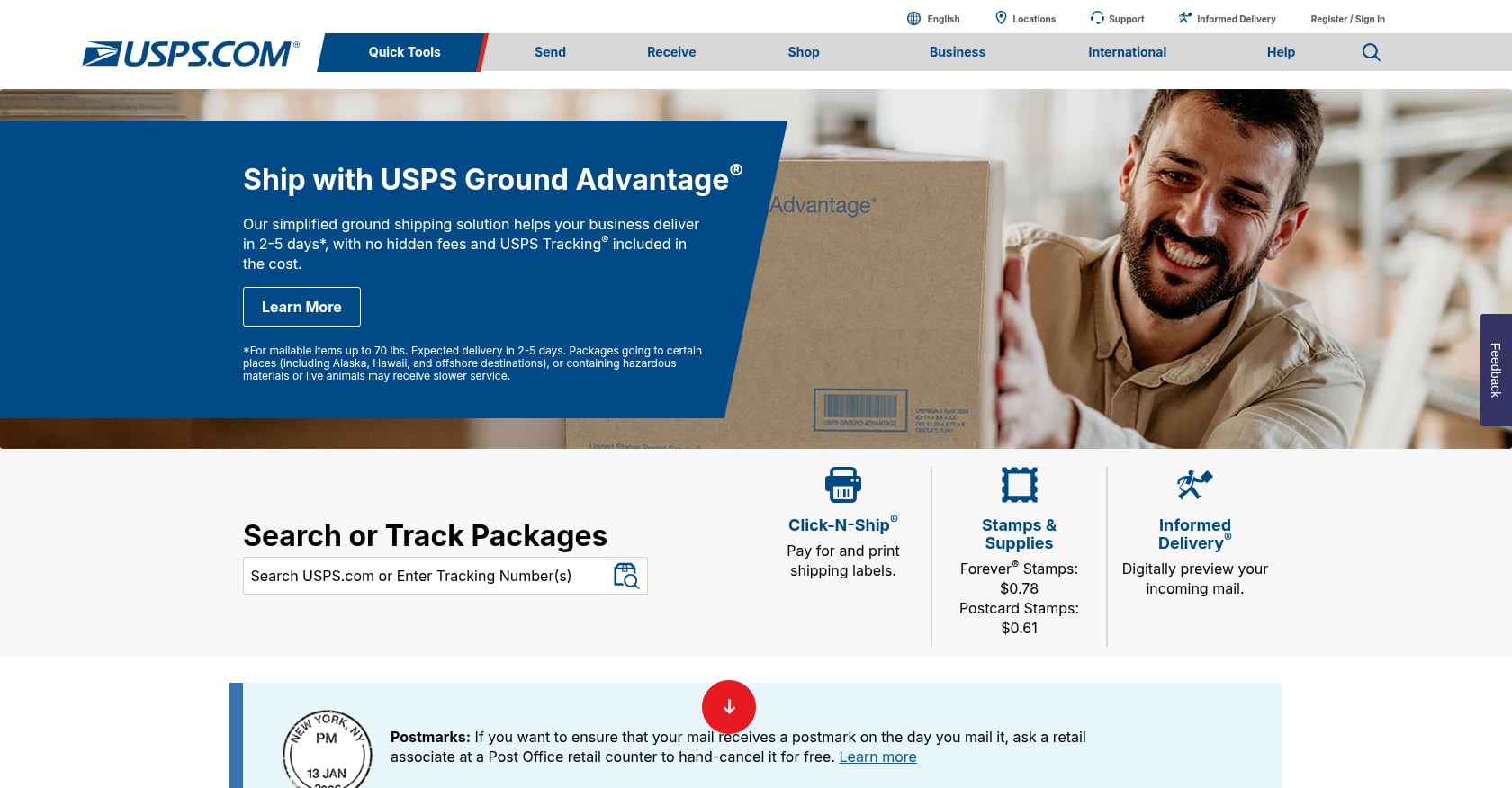
USPS will ship free Flat Rate boxes directly to your door. You pack them, pay a fixed price, and the cost stays the same whether you’re sending the package across town or across the country. Weight doesn’t matter either, as long as the item fits and the box doesn’t exceed 70 pounds.
As of January 2026, commercial Flat Rate prices are: Flat Rate Envelope ($10.30), Small Flat Rate Box ($11.20), Medium Flat Rate Box ($19.60), and Large Flat Rate Box ($28.70). For context, a 15-pound package from California to Maine via weight-based Priority Mail would cost over $50 at Zone 8. The Medium Flat Rate Box handles that same shipment for $19.30, cutting the cost by more than half.
Flat Rate shipping also eliminates hidden costs. There are no fuel surcharges, no weekend delivery fees, and no residential delivery charges.
When Flat Rate loses: Shipping a 1-pound item in a Medium Flat Rate Box because the packaging is free is a $14 mistake. Flat Rate only makes financial sense for heavy items traveling long distances. For lightweight packages, short routes, or dense items that qualify for Cubic pricing, you’ll almost always find a cheaper option. For a detailed breakdown of when each option wins, see our guide on flat rate vs. variable shipping.
The sweet spots: Small Flat Rate ($11.20 commercial) beats standard Priority Mail for packages over 2 pounds to all zones. Medium Flat Rate ($19.60) wins for packages over 11 pounds to all zones, or 5 to 6 pounds going to Zones 5 through 9. Large Flat Rate ($28.70) wins for packages over 18 pounds to all zones.
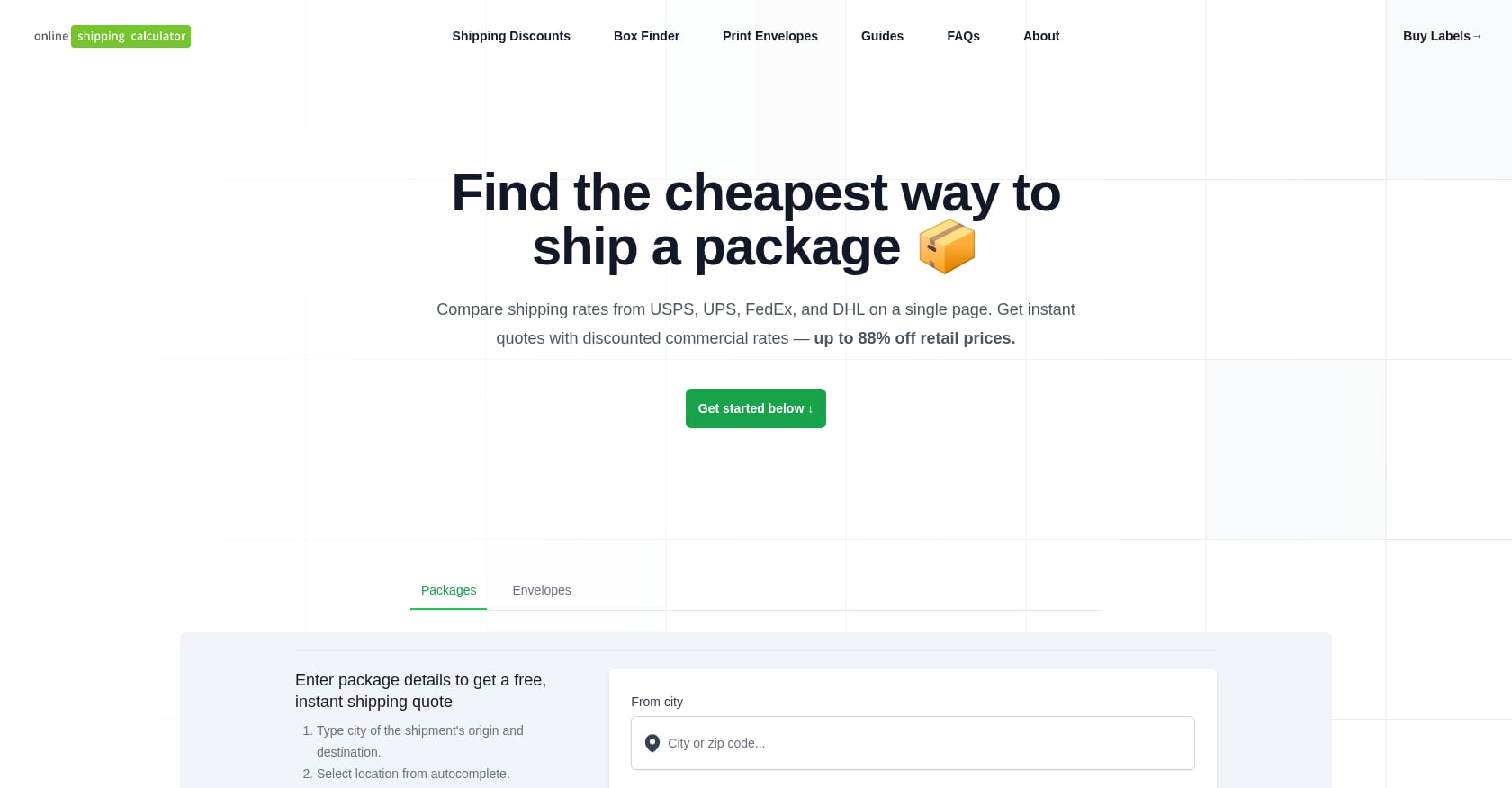
3. Compare Rates Across Carriers Before Every Shipment
Best for: Anyone shipping varied package sizes and destinations.
Too many people pick a carrier out of habit and stick with it. That’s expensive, because the cheapest option changes depending on weight, dimensions, and distance.
USPS almost always offers the best rates for packages under 2 pounds, especially for residential delivery. That advantage disappears at heavier weights. For 20-plus pound items shipping to nearby zones, UPS Ground may be significantly cheaper. FedEx sometimes wins on large, lightweight packages where dimensional weight plays a role.
The differences can be stark. An eBay seller on the eBay Community forums shared that for a 40"x24"x8" 9-pound item, the FedEx counter wanted $135, while eBay’s printed label came in at $60. Same carrier, same service, more than 50% cheaper.
Free multi-carrier rate comparison tools eliminate the guesswork. Enter your package dimensions, weight, origin, and destination, then see USPS, UPS, and FedEx rates side by side. Our guide on how shipping costs are calculated explains the factors that drive these differences.
4. Create a Free Carrier Account and Ship from Home
Best for: People who don’t want third-party platforms but still want to avoid retail counter pricing.
You don’t need shipping software to get better rates. Simply creating a free account on UPS.com or FedEx.com unlocks “daily” rates that are lower than walk-in retail pricing. These daily rates are typically reserved for customers who have established a regular shipping relationship with the carrier, and even a basic free account qualifies.
The workflow: log into your account, enter the shipment details, pay for the label, print it at home, and drop off the package. You can drop off at most UPS Store locations without paying the store’s markup fees as long as you’ve already purchased the label online. This combination gives you direct carrier pricing with UPS Store convenience.
No printer required: The FedEx Mobile app generates a QR code when you create a label. Walk into any FedEx Office, scan the code, and the label prints on the spot.
The savings from carrier accounts won’t match what dedicated shipping software negotiates, but they’re real and require zero commitment. It’s a solid middle ground for people shipping a handful of packages per month.
5. Schedule Free USPS Pickup Instead of Going to a Counter
Best for: People who pay retail because the post office is convenient and they don’t want to make a separate trip.
A lot of people end up paying retail counter rates not because they want to, but because they’re already at the post office. The counter is right there. The line is short (or at least moving). They figure they’ll just pay whatever it costs.
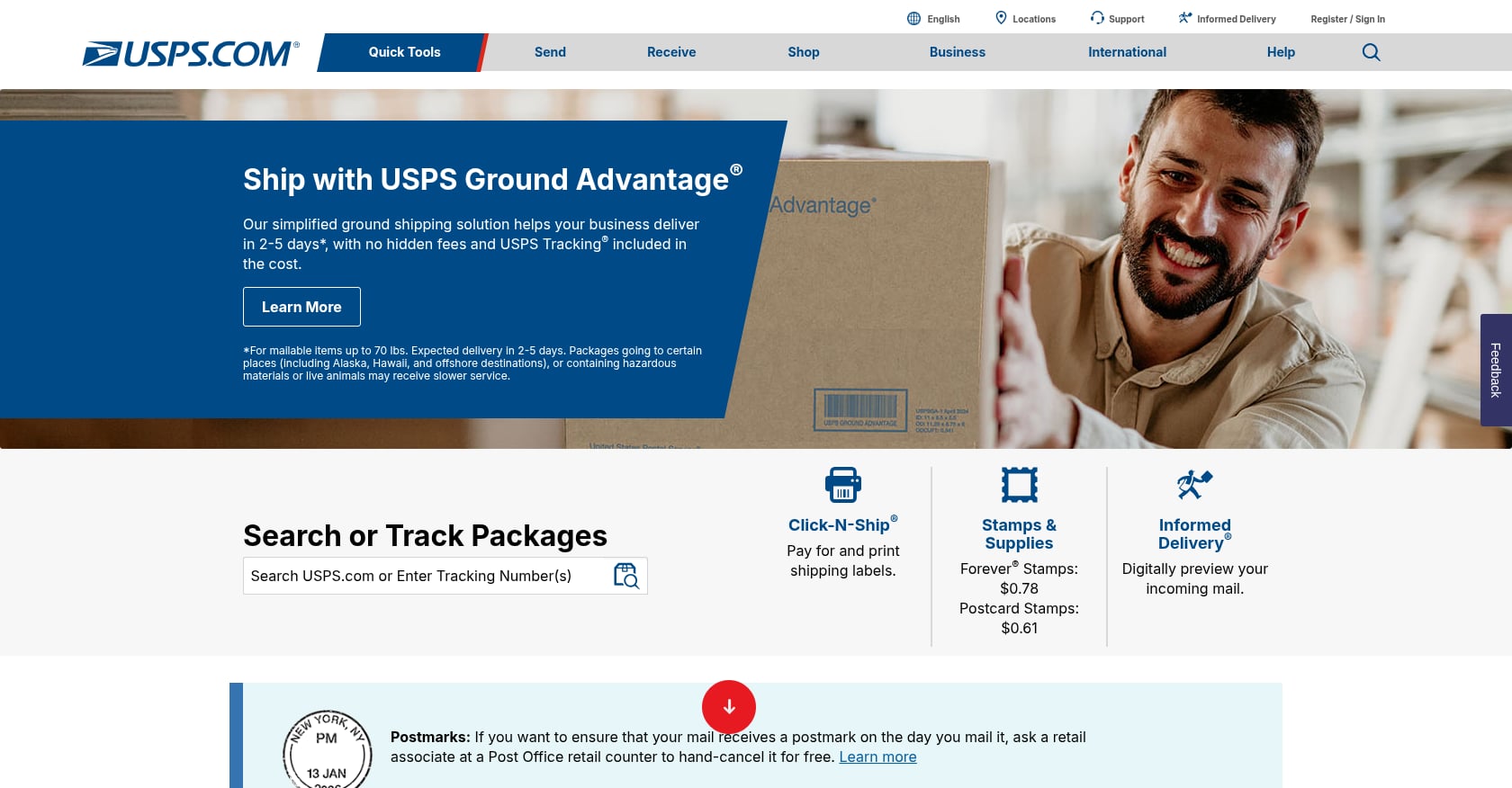
USPS offers a completely free pickup service for prepaid packages. If you’re using Priority Mail, Priority Mail Express, or Ground Advantage, you can schedule a pickup from your home or office at no charge. The mail carrier picks up the package during their regular delivery route. You don’t leave your house, you don’t wait in line, and you don’t face the temptation to “just ship it at the counter.”
Schedule pickups through USPS.com or directly through most shipping platforms. For step-by-step instructions, see our guide to scheduling a free USPS pickup.
6. Use Marketplace Shipping Labels
Best for: Sellers on eBay, Etsy, Mercari, or Facebook Marketplace.
If you sell on any major online marketplace, you already have access to commercial shipping rates through the platform’s built-in label purchasing. This is one of the easiest strategies to avoid paying retail counter rates at carrier stores, because the discount is built right into the selling workflow.
The price gap is significant. One practitioner on an eBay forum noted: “A 4x6 padded envelope that weighs a couple ounces is $9 to $12 on USPS.com or UPS, but via eBay/FB or all the discount places I can send it for $4.” Mercari was offering $4.99 UPS/FedEx shipping for packages 1 to 5 pounds as a promotional rate through April 2026.
The catch is that marketplace labels only work for items sold on that platform. For everything else (returns, personal shipments, items sold through other channels), you’ll need one of the other strategies on this list. Our guide to the best free label service for Etsy sellers covers this in more detail.
7. Right-Size Your Packaging to Avoid Dimensional Weight Charges
Best for: Anyone shipping items in boxes that are larger than necessary.
Carriers charge by whichever is greater: actual weight or dimensional weight. Dimensional weight is calculated by multiplying the box’s length, width, and height, then dividing by a carrier-specific factor (typically 139 for UPS and FedEx domestic). If you ship a 3-pound item in a box that calculates to 10 pounds of dimensional weight, you pay for 10 pounds.
This means shipping dead air is expensive. By modifying boxes to fit the item snugly, with just enough padding for safety (usually 2 inches on all sides), you avoid paying for empty space. Some experienced shippers cut down larger boxes to create custom sizes for every shipment.
UPS implemented new dimensional surcharge rules effective January 2026. Packages over 10,368 cubic inches now trigger Additional Handling fees. That’s a box roughly 22" x 22" x 22", which isn’t as large as it sounds when you factor in bulky items.
If dimensions are not provided or are inaccurate, USPS may apply a $3.00 fee per package. Getting your measurements right matters. For a deeper look at how packaging choices affect shipping costs, see our guide on how dimensional pricing affects packaging.
8. Negotiate Directly with Carriers
Best for: Established businesses shipping 50 or more packages per week. Not practical for casual shippers.
If you’re shipping at volume, direct carrier negotiations are one of the most powerful strategies to avoid paying retail counter rates at carrier stores, or even the standard commercial rates that shipping software provides.
Direct carrier negotiations typically yield 20% to 50% off published rates for small businesses. Combined with surcharge waivers and dimensional weight factor adjustments, total savings can reach 40% to 65%. The key is coming prepared: bring your shipping data showing volumes, average package profiles, and zone distribution. Competing quotes from rival carriers give you additional leverage.
Renegotiate annually, or whenever your volume changes significantly (a 25% or greater increase). Carrier reps expect this. The worst they can say is no.
For businesses not yet at negotiation volume, see current shipping discounts available through commercial rate platforms. These effectively replicate what a mid-size shipper would negotiate on their own.
9. Explore Priority Mail Cubic Pricing
Best for: Sellers shipping small, heavy items like jewelry, hardware, supplements, or cosmetics.
Cubic pricing is USPS’s best-kept secret. Instead of charging by weight, it charges by the volume of the package. If the item is small but dense, Cubic pricing can be dramatically cheaper than both standard Priority Mail and Flat Rate.
Here’s the catch: Cubic pricing isn’t available at the Post Office or on USPS.com. Access requires a shipping platform (like Pirate Ship) that has negotiated Cubic rates with USPS as part of a commercial agreement. Most smaller shippers never get it directly because USPS’s own threshold is around 5,000 Priority Mail packages per month. But several free shipping platforms include it automatically.
If you’re shipping something small and heavy, run Cubic and Flat Rate side by side before committing. You won’t always save money, but when you do, the gap is significant. This pricing tier is one reason practitioners on forums like Practical Machinist and Reddit’s r/Flipping overwhelmingly recommend third-party shipping platforms. The consensus in one Practical Machinist thread was blunt: “Pirate Ship pirate Ship pirate Ship,” with one user summarizing, “In my opinion Pirate Ship is the best unless you ship a lot of stuff or need a website and webstore. It’s also the only one you don’t get nicked $30 a month for.”
10. Avoid Common Surcharges That Inflate Your Costs
Best for: Anyone who ships regularly and hasn’t audited their carrier bills.
Beyond base rates, carriers pile on surcharges that quietly inflate the total cost. Understanding these fees is a critical part of any strategy to avoid paying retail counter rates at carrier stores.
Residential surcharges: UPS adds $4.85 per package delivered to a residence. FedEx charges similar amounts. USPS charges no residential delivery surcharge at all. For a seller shipping 100 packages a month to home addresses, that’s $400 to $600 in savings just by choosing USPS for residential deliveries.
Address correction fees: USPS charges $0.74 per manual notice for address correction. UPS applies a $19.50 fee for the same. Double-checking addresses before shipping is the cheapest quality control investment you’ll ever make.
Dimensional surcharges: As mentioned in Strategy 7, oversized boxes trigger additional handling fees. UPS’s 2026 rules specifically target packages over 10,368 cubic inches.
Saturday delivery: What used to be a standard surcharge at UPS and FedEx is now waived for certain services, but not all. Check before assuming.
The pattern across all these surcharges is the same: USPS is the most forgiving carrier for casual and residential shippers. UPS and FedEx offer advantages at higher weights and volumes, but their surcharge structure punishes small-volume shippers who aren’t paying attention. Our detailed UPS vs. USPS rate comparison breaks down where each carrier wins.
Which Strategy Matters Most for You?
Not every strategy applies equally to every shipper. Here’s a quick decision framework based on your shipping volume.
Casual shipper (1 to 5 packages per month): Focus on Strategy 1 (free shipping software), Strategy 4 (free carrier account), and Strategy 5 (USPS pickup). These three changes alone will cut your shipping costs by 30% to 50% with virtually no effort.
Small e-commerce seller (20 to 100 packages per month): Layer in Strategy 2 (Flat Rate boxes for heavy items), Strategy 3 (carrier comparison for every shipment), Strategy 6 (marketplace labels), and Strategy 9 (Cubic pricing for small, heavy goods). At this volume, the savings compound quickly. That WoodBarter user saving $880 a year on just 66 shipments gives you a sense of the math.
Growing business (100+ packages per month): Everything above, plus Strategy 8 (direct carrier negotiation). At 400+ packages per month, you should also be auditing surcharges aggressively (Strategy 10) and optimizing packaging dimensions (Strategy 7). A small business shipping setup guide can help you build a systematic workflow.
No matter which profile fits you, the first step is the same: stop paying retail counter rates. The tools to avoid them are free, available right now, and take less than five minutes to set up.
Check your rates across carriers before your next shipment.
Frequently Asked Questions
Is it safe to buy shipping labels from third-party platforms?
Yes. Platforms like Pirate Ship, Shippo, and Veeqo are authorized resellers working under commercial agreements with USPS, UPS, and FedEx. The labels they generate are legitimate carrier labels with full tracking and standard insurance. These aren’t gray-market workarounds. They’re the same pricing tier that large retailers use.
Can I still drop off at the UPS Store if I print my own label?
Absolutely. You can create a discounted UPS shipping label online and drop it off at most UPS Store locations without paying the store’s markup fees. The store acts as a drop-off point. You’ve already purchased the label at a lower rate, so there’s no counter transaction and no additional charge.
Which carrier is cheapest for packages under 2 pounds?
USPS wins this category almost every time, especially for residential delivery. USPS charges no residential surcharge, while UPS and FedEx both add $4 to $6 per residential package. For lightweight items, USPS First-Class Package or Ground Advantage commercial rates are hard to beat. The gap narrows as weight increases past 15 to 20 pounds.
Do commercial rates include tracking and insurance?
Yes. Commercial-rate labels include the same tracking as retail labels. USPS Priority Mail includes up to $100 of insurance at both retail and commercial pricing. Ground Advantage includes up to $5 of coverage regardless of how you buy the label. UPS and FedEx include $100 of declared value coverage by default on most services.
Why are UPS Store rates so much higher than online UPS rates?
UPS Stores are independently owned franchises. The prices they charge include markups that cover the franchise’s rent, labor, packaging materials, and profit margin. When you create a label on UPS.com or through shipping software, you bypass that franchise layer entirely and access rates closer to what businesses pay.
What if I don’t ship enough to negotiate carrier rates?
You don’t need to negotiate. Free shipping platforms like Pirate Ship have already negotiated commercial rates on behalf of their users. Even shipping one package a month, you’ll get the same discounted rates as someone shipping hundreds. That’s the entire value proposition of these platforms.
Are 2026 shipping rates higher across the board?
Not exactly. While retail rates increased across all major carriers (USPS Ground Advantage retail went up 5.9%, UPS and FedEx averaged 5.9% increases), USPS commercial rates for 10 to 20 pound packages actually dropped up to 26%. This means the savings from switching to commercial-rate platforms are larger in 2026 than they were in previous years.
Can I use these strategies for international shipments?
Most of them, yes. Pirate Ship, Shippo, and Easyship all support international labels at commercial rates. Flat Rate boxes work for some international destinations through USPS Priority Mail International. For cross-border specifics, carrier comparison becomes even more important because the rate spread between carriers on international routes tends to be wider than domestic.